Saam Korean acupuncture is a traditional system of acupuncture that uses a small number of carefully selected points, usually on the hands, arms, feet and lower legs. Its foundations lie in the Five Phases of East Asian medicine, with point combinations chosen according to the individual’s traditional assessment.
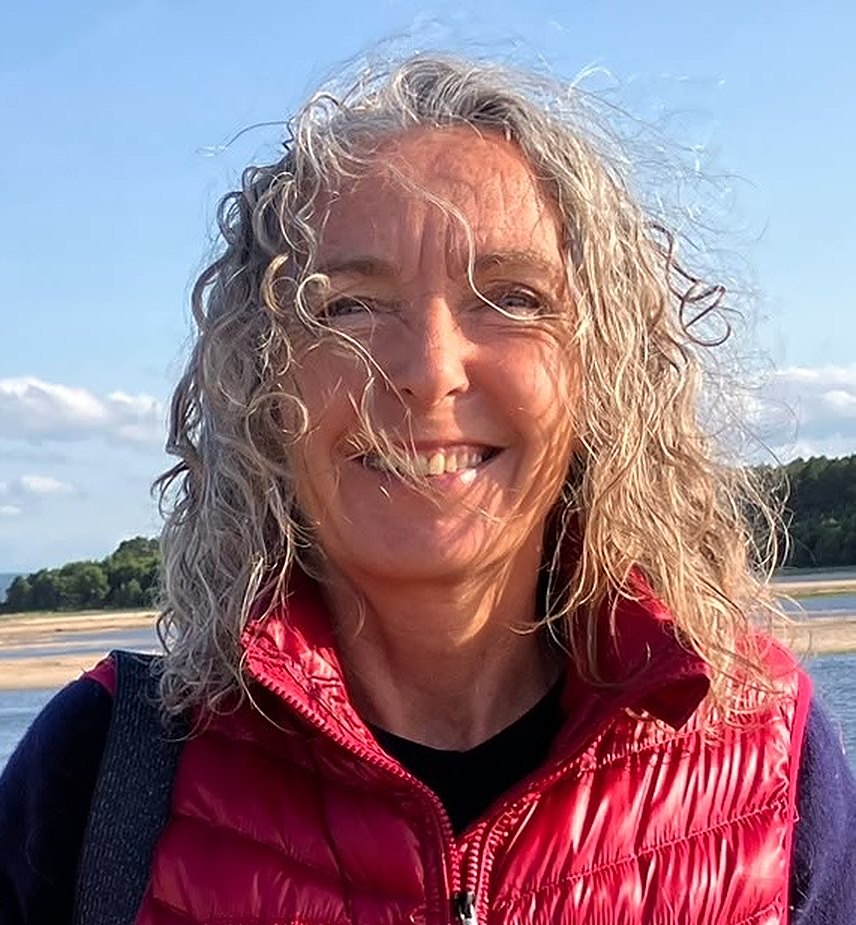
At Nature’s Qi Health in Forres, Moray, Saam has become an important part of my acupuncture practice. I value its simplicity, the attention it gives to the relationships within the body, and the way it brings together much of my earlier training.
People are sometimes surprised to discover how few needles may be used in a Saam treatment. There is a great deal of thought behind those four points.
What is Saam Korean acupuncture?
Saam acupuncture, also written Sa-Ahm or Saam Chim, developed in Korea during the Joseon dynasty, with its earliest surviving written tradition dating to the seventeenth and eighteenth centuries. The system is traditionally associated with a Buddhist monk known as Saam, although the historical details of his identity remain uncertain.
Saam draws on the classical principles of Yin and Yang, the Five Phases or Elements, and the meridian system of East Asian medicine. Its distinguishing feature is the way acupuncture points are combined. A traditional Saam prescription commonly consists of four points, selected through relationships between different meridians and the Five Phases. Some variations use fewer points or adapt the combinations.
The approach considers the pattern presented by the whole person, rather than selecting points solely according to the location of a symptom. This is one of the aspects I particularly appreciate. We begin with your experience, your health history and what is happening in your life. The traditional assessment then guides the choice of points.
The origins of the four-needle method
The history of Saam acupuncture is fascinating. Its roots reach into the classical medical literature of East Asia, particularly the Nan Jing, or Classic of Difficult Issues, and the traditional relationships described through the Five Phases.
In Korea, these ideas developed into a distinctive method of acupuncture.
The earliest surviving Saam manuscripts are generally dated between 1644 and 1742. They describe a system in which carefully chosen points on different meridians are combined according to traditional principles of nourishment and regulation.
The method was passed through generations of practitioners, with later writings adding clinical observations and variations. Today, Saam remains part of Korean traditional medicine and is also studied and practised internationally.
A detailed historical and theoretical review, A Modern Clinical Approach of the Traditional Korean Saam Acupuncture, describes the development of the system and its classical foundations.
Why four needles?
The four-point method is built around relationships between the Five Phases. Within traditional Saam theory, two points are commonly selected for tonification, or nourishment, and two for sedation, or reducing an excess within the traditional pattern.
These terms describe actions within classical acupuncture theory. They should not be interpreted as directly increasing or decreasing the activity of a particular organ in the biomedical sense. The points are selected according to relationships between the meridians themselves.
This is what makes the system so interesting. A point on the hand may be chosen as part of a pattern involving another meridian. A point on the lower leg may have a relationship with a different phase. The selection follows the internal logic of the traditional system.
There is elegance in the arrangement: a small number of points, each with its place in the whole.
The Five Phases: Wood, Fire, Earth, Metal and Water
The Five Phases are central to Saam acupuncture. They describe relationships and transformations within the natural world and the human experience. They are often called the Five Elements, although phases can be a more helpful translation because it conveys movement and change.
Wood: growth and direction
Wood is associated with spring, growth, flexibility and movement. Think of the first shoots appearing after winter, or the way branches respond to their surroundings as they grow. In traditional East Asian medicine, Wood is associated with the Liver and Gallbladder meridian systems.
Fire: warmth and expression
Fire is associated with summer, warmth, activity and connection. Its traditional meridian associations include the Heart, Small Intestine, Pericardium and San Jiao.
Earth: nourishment and stability
Earth represents nourishment, transformation and the ability to sustain life. It is traditionally associated with the Spleen and Stomach systems.
Metal: structure and refinement
Metal is associated with autumn, boundaries, discernment and the movement between taking in and letting go. Its meridian associations are the Lung and Large Intestine.
Water: depth and conservation
Water is associated with winter, rest, reserves and the capacity to adapt. Its traditional meridian systems are the Kidney and Bladder. These associations are part of the classical East Asian medical framework. They are symbolic and theoretical relationships, not scientifically established links between seasons, emotions and the function of anatomical organs.
The Five Phases are also understood through cycles of generation and regulation. Wood nourishes Fire. Fire creates Earth. Earth gives rise to Metal. Metal is associated with Water, and Water nourishes Wood. A second cycle describes how the phases regulate one another.
Saam acupuncture uses these relationships to determine traditional point combinations.
How is Saam different from other forms of acupuncture?
There are many approaches to acupuncture, each with its own history and principles. Traditional Chinese acupuncture may involve a combination of local points, points elsewhere on the body, and additional techniques chosen according to the practitioner’s assessment.
Japanese acupuncture encompasses several traditions, some of which place particular emphasis on palpation and subtle needle techniques. Saam Korean acupuncture has its own distinctive method of selecting and combining points.
Points on the arms and legs
Saam commonly uses points below the elbows and knees. This means that the needles may be placed some distance from the part of the body a person is concerned about. Within traditional acupuncture, this is sometimes called a distal approach.
For example, a practitioner may select points on the hand or foot according to the meridian relationships identified in the traditional assessment. The point selection is based on Saam’s classical principles rather than a direct anatomical connection between the needle location and the symptom.
Fewer needles
A standard Saam prescription often uses four needles, although variations exist. Other acupuncture systems may also use small numbers of needles, so the number alone does not define the method. What distinguishes Saam is the particular relationship between the points selected.
Using fewer needles does not establish that Saam is more effective or safer than other appropriately performed acupuncture methods. For me, its simplicity is one of the qualities that makes it appealing to work with.
A different way of selecting points
In Saam, the practitioner considers traditional patterns of relative excess and deficiency, and the relationships between meridians. The selected points are then combined according to the Five Phase system. The same physical symptom may be approached differently in two people because the traditional assessment differs.
This reflects an idea that runs throughout my work: every person has their own history and circumstances, and treatment should take account of that individuality.
How I use Saam at Nature’s Qi Health
My acupuncture training began in New Zealand, where I completed four years of degree-level study in traditional Chinese medicine and acupuncture in 2006. Since then, I have continued studying different approaches to East Asian medicine.
Saam Korean acupuncture has brought together many aspects of that earlier learning. I am drawn to its relationship with the Five Phases, the way it chooses points and its emphasis on understanding the individual pattern.
Beginning with your experience
An appointment begins with a conversation. We discuss your health history, what has brought you to the clinic, and the physical, emotional and everyday circumstances that may be relevant. Sleep, food, movement, work, medication, previous illness and significant life experiences can all form part of that discussion.
You are welcome to share your observations in your own words. I am interested in what you feel and how your experiences change. Everything is approached confidentially and without judgement.
Choosing an approach together
Following our conversation and assessment, I explain the acupuncture approach I am considering. Saam may be appropriate within the traditional framework, or I may consider another technique. I also draw on acupressure, Tuina, tuning forks and other complementary approaches where suitable.
Different methods may be used in combination, although the decision depends on your circumstances, preferences and relevant safety considerations. You remain involved throughout.
Responding to what you notice
During acupuncture, some people experience very little sensation. Others notice tingling, warmth, heaviness or a brief dull ache. In traditional acupuncture, a particular needle sensation is known as De Qi. I encourage you to tell me what you are experiencing.
Your comfort matters, and we can adjust or stop the treatment at any point. Each appointment is also an opportunity to reassess. Your needs may change, and our approach can change with them.
Does Saam acupuncture hurt?
Saam uses the same general type of fine acupuncture needles used in other traditional acupuncture approaches. The needles are considerably finer than those commonly used for injections. Some people feel very little during insertion. Others experience a brief sensation.
Needle sensations vary according to the person, the point selected and the technique used. Saam often involves fewer needles than some other acupuncture treatments, which may appeal to people who feel uncertain about acupuncture. However, fewer needles do not guarantee a painless experience.
If you are nervous about needles, please tell me. We can discuss what is involved, consider your preferences and decide together whether acupuncture is appropriate. My article on what to expect at your first acupuncture appointment in Forres explains the process in more detail.
What does the research say about Saam acupuncture?
Saam has a long history within traditional Korean medicine, but its use in clinical practice should be distinguished from scientific evidence of effectiveness. Researchers have investigated Saam acupuncture for several conditions, including musculoskeletal pain and other health concerns.
A 2021 literature review examined 52 clinical publications, including 19 randomised controlled trials.
The authors found that many studies reported positive outcomes, but the overall quality of the evidence was limited. Some studies combined Saam with other treatments, making it difficult to identify the specific contribution of the Saam intervention.
They concluded that better-designed clinical trials were needed. You can read A Literature Review of Clinical Studies Using Sa-am Acupuncture.
Is Saam more effective than other acupuncture styles?
There is currently insufficient high-quality comparative evidence to establish that Saam is more effective than other acupuncture systems. Its distinctive features lie in its history, traditional theory and point-selection method.
Research concerning acupuncture more generally cannot automatically be applied to Saam for every condition. For example, NICE makes specific recommendations concerning acupuncture for chronic primary pain and certain headache conditions, but those recommendations do not establish the superiority of Saam.
You can explore the wider evidence in my articles on acupuncture for chronic pain and acupuncture for headaches and migraine.
What about the nervous system?
Some research has explored whether Saam acupuncture influences measures associated with autonomic nervous system activity. The autonomic nervous system is involved in functions such as heart rate, digestion and other processes that occur without conscious control.
Small studies and theoretical reviews have discussed possible physiological responses to Saam acupuncture. However, these findings are preliminary and do not demonstrate that Saam treats autonomic disorders or reliably restores a particular physiological balance.
More rigorous research is needed.
Saam, Qi and the idea of free flow
In traditional East Asian medicine, Qi is understood as part of the dynamic relationships that sustain life. It is often translated as vital energy, although the classical meaning is broader. Qi and the meridian system belong to a traditional medical framework. They have not been demonstrated as measurable energy pathways by modern science.
One of the expressions I particularly value is Xiao Yao, meaning free flow. It describes a quality of harmonious movement and adaptability. Within Saam theory, the relationships between the Five Phases are used to guide traditional treatment choices.
For me, this also connects with a wider interest in how we respond to change. Our bodies, circumstances and priorities are continually evolving. There is value in recognising this, and in remaining attentive to what we experience.
Who might be interested in Saam acupuncture?
People enquire about Saam for different reasons. Some are already familiar with acupuncture and are interested in learning about another traditional system. Others are curious about the four-needle method or would like to understand how it differs from more familiar forms of acupuncture.
You may be exploring acupuncture as part of your general wellbeing, or considering it alongside appropriate medical care for a particular concern. The suitability of acupuncture depends on your health circumstances, and the available evidence varies by condition.
At Nature’s Qi Health, my wider practice includes an interest in physical comfort, emotional wellbeing and women’s health. You can read more about these areas in my articles on acupuncture for stress and emotional wellbeing and acupuncture and menopause.
I am always happy to discuss whether my approach may be appropriate for you.
Is Saam acupuncture safe?
Saam uses fine needles inserted through the skin, so the general safety considerations for acupuncture apply. Acupuncture is relatively safe when performed by an appropriately trained practitioner using appropriate infection-control procedures, although it is not without risk.
Temporary soreness, minor bleeding, bruising or lightheadedness may occur. Rare but serious complications, including infection or injury to internal structures, are possible. At Nature’s Qi Health, I use sterile, single-use needles.
Before treatment, please tell me about relevant medical conditions, pregnancy, anticoagulant medication, bleeding disorders, recent surgery or any other circumstances that may influence safety. Acupuncture should not delay necessary medical assessment or replace treatment recommended by your GP or specialist.
Saam Korean acupuncture in Forres, Moray
Nature’s Qi Health is based at 15 Woodside Drive in Forres, Moray. I welcome enquiries from Forres, Elgin, Findhorn, Kinloss, Nairn and surrounding communities. My garden clinic is a personal setting for acupuncture appointments, with time to discuss your individual circumstances and questions.
A standard appointment lasts approximately one hour and costs £70. I am a member of the Association of Acupuncture Clinicians, and you can view my professional membership profile. For more about my background, treatments and clinic, read the complete guide to acupuncture in Forres, Moray.